
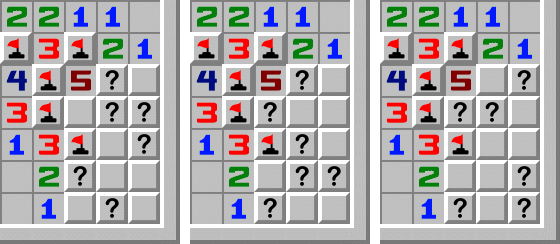
Minesweeper creates a unique gaming experience by requiring players to balance careful deliberation with logical analysis throughout every session. The game demands systematic information gathering while rewarding methodical approaches to problem-solving. This combination transforms simple grid navigation into complex mental exercises that develop both analytical skills and emotional control. The interplay between these cognitive requirements creates an engaging puzzle format that challenges multiple mental faculties simultaneously.
Information gathering phases
Minesweeper’s opening moves establish the foundation for all subsequent decisions, requiring players to collect data methodically before making advanced logical deductions. Initial clicks must be strategic rather than random, as early information shapes the entire session’s trajectory. Experienced players gain confidence in optimal opening strategies, knowing systematic data collection leads to success when they find more info. The patient accumulation of numerical clues allows players to build comprehensive mental maps of mine locations and safe zones. This process requires resisting the urge to make hasty moves while maintaining focus on long-term strategic objectives. The tension between wanting quick progress and needing thorough analysis creates the core challenge that defines Minesweeper’s appeal.
Deductive reasoning chains
Complex Minesweeper scenarios require multi-step logical sequences where each deduction builds upon previous conclusions. These reasoning chains demand patience as players work through intricate logical progressions without rushing to premature conclusions. The mental discipline required to maintain accuracy through extended logical sequences develops cognitive skills that extend beyond gaming contexts. Advanced deductive scenarios often involve multiple interdependent logical paths that must be evaluated simultaneously:
- Conditional logic chains where one conclusion depends on testing alternative hypotheses
- Elimination processes that require systematic consideration of all possible mine configurations
- Probability assessments when multiple valid solutions exist within the same game state
- Cross-referencing between distant grid areas to resolve local ambiguities
These complex reasoning requirements reward patient analysis while punishing impulsive decision-making.
Calculated exploration
Safe cell identification requires balancing conservative approaches with necessary risk-taking to maintain game progress. This balance demands strategic thinking about which areas to explore first and which to save for later analysis. The decision-making process involves evaluating multiple factors, including information potential, safety levels, and strategic positioning for future moves. Methodical exploration patterns prevent players from becoming trapped in unsolvable situations while maximizing information extraction from each revealed cell. The patience required to follow systematic exploration protocols often conflicts with the desire for rapid progress, creating internal tension that enhances engagement levels.
Pattern recognition development
Experienced Minesweeper players develop extensive libraries of common mine patterns that allow rapid situation assessment and solution identification. This pattern recognition emerges through patient practice and repeated exposure to similar configurations. The accumulation of pattern knowledge creates efficiency gains that reward dedicated study and persistent engagement. Complex patterns often require combining multiple simple configurations into compound scenarios that demand both pattern recognition and logical analysis. The mental flexibility needed to adapt known patterns to novel situations develops through sustained practice and careful attention to subtle variations.
Endgame precision demands
Minesweeper’s final moves typically involve the highest risk and require maximum precision in both logical analysis and execution. These endgame scenarios often present multiple possible solutions that must be evaluated through careful probability calculations. The pressure of near-completion creates emotional challenges that test patience and strategic thinking under stress. Critical endgame decisions frequently involve choosing between guaranteed progress and optimal positioning for final moves. These choices require long-term strategic vision combined with precise tactical execution. The patience needed to evaluate all options thoroughly before committing to final moves often determines success or failure in challenging sessions.